Tiny Molecule, Mighty Results
Ozone can be found in two very different places: high up in the stratosphere where it forms the “ozone layer,” our planet’s built-in sunshade that blocks harmful UV radiation, while down at ground level it can show up as a smog pollutant or, when carefully controlled, as a powerful tool for cleaning air, water and surfaces.
In this guide we’ll explore ozone’s natural origins, how it’s generated for industrial use, the regulations and safety steps you need to know, and the many ways it keeps operations from food production to wastewater treatment cleaner, greener and more efficient.
Ozone: A Brief History
Ozone was first identified in 1839 by Christian Friedrich Schönbein, who described its distinctive smell after lightning storms. Early scientists were fascinated by its pungent aroma and strong bleaching action, leading to experiments in water treatment and textile processing during the late 19th century. By the early 20th century, ozone found commercial use in European waterworks, pioneering chemical-free disinfection. As understanding of its oxidative power grew, so did safety concerns, which ultimately set the stage for the development of modern ozone standards and regulations.


Ozone Calculations & Conversions
Understanding ozone concentration is crucial for designing effective systems. Concentrations are typically expressed in milligrams per litre (mg/L), grams per cubic meter (g/m³) or parts per million (ppm), depending on whether you’re dosing water or air. Converting between units—such as ppm to mg/L—requires accounting for temperature, pressure and the specific phase.
Engineers use standardised equations, like the ideal gas law for gas-phase dosing or stoichiometric ratios for aqueous applications. Accurate calculations ensure you deliver just the right amount of ozone to achieve disinfection or oxidation without wasting gas or incurring the risks associated with overexposure.
How Ozone Is Made?
Ozone is generated on-site due to the fact it cannot be stored or transported safely. The two most common methods are corona discharge and ultraviolet (UV) irradiation. Corona discharge forces oxygen through a high-voltage electrical field, splitting O₂ molecules before recombining them into O₃. UV generation passes air or oxygen through lamps emitting at 185 nm, converting a fraction of O₂ into O₃. While UV units are compact and low-maintenance, corona-discharge systems offer higher output and energy efficiency, making them ideal for large-scale water treatment or air-disinfection applications.

How Ozone Reacts
Ozone’s third oxygen atom makes it highly reactive, ready to oxidise almost any organic or inorganic compound it contacts. In water, ozone reacts directly with dissolved contaminants or decomposes into hydroxyl radicals, which are even more powerful oxidants. In the gas phase, ozone attacks the cell membranes of bacteria and viruses, causing them to rupture and inactivate the pathogens. These rapid, surface-level reactions allow ozone to disinfect hard-to-reach areas and destroy microscopic pollutants in both air and water.
How Ozone Breaks Down
Because ozone is so reactive, it doesn’t linger indefinitely. In water, it naturally decomposes back to oxygen in minutes to hours, depending on temperature, pH and the presence of catalysts. This rapid decay makes ozone an excellent “chemical-free” option: no long-term residues remain. In the air, ozone reverts to normal oxygen within minutes under typical indoor conditions. Excess ozone can be safely destroyed using catalytic destruct units or activated carbon filters, ensuring compliance with occupational exposure limits and preventing off-gassing into surrounding spaces.
Ozone & Biocidal Regulations
Ozone used for disinfection is classified as a biocide in many regions, including the EU and UK. This requires compliance with regulations such as the EU Biocidal Products Regulation (BPR) and UK Control of Substances Hazardous to Health (COSHH). Manufacturers must register ozone-generating equipment and demonstrate safe, effective use. End users need documented validation of disinfection cycles, operator training records and routine performance testing to satisfy auditors and inspectors.
Ozone Safety & Handling Guidelines
While ozone is non-toxic at low concentrations, it can irritate lungs and mucous membranes if overexposed. Safe handling means designing systems to maintain treatment zones under controlled conditions, installing ozone destructors or scrubbers at exhaust points, and using continuous ozone sensors. Operators should therefore receive training on startup/shutdown procedures, leak detection protocols, and personal protective equipment (PPE). Regular maintenance, such as replacing seals and UV lamps, will also help ensure long-term safety and reliability.
Ozone Effects on Pathogens
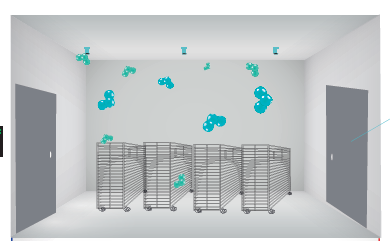
Ozone rapidly inactivates bacteria, viruses, fungi and protozoa by oxidising cell walls and disrupting metabolic functions. Studies show log-reduction values of 4–6 logs for common foodborne pathogens like E. coli and Listeria at relatively low ozone doses in water. In air-phase applications, ozone eliminates airborne viruses and mould spores, reducing cross-contamination risks in processing rooms or cold stores. Its penetration into crevices and porous surfaces often outperforms traditional disinfectants.

Ozone Decomposition
Ozone decomposition is the breakdown of O₃ back into O₂, often via intermediate radicals. Factors accelerating this process include higher temperatures, alkaline pH and catalytic surfaces, such as metal ions or glass. Decomposition kinetics inform system design, knowing how quickly ozone decays helps size contact chambers, determine off-gas treatment requirements and ensure effective residual concentrations. Controlled decay also means minimal environmental impact.
Ozone in Various Industries
Ozone’s versatility spans food & beverage, hospitality, healthcare, aquaculture, textiles, pulp and paper, and beyond. In each sector, its oxidative prowess solves unique challenges: sanitising tanks in breweries, bleaching fabrics in dye houses, or removing micropollutants in municipal wastewater plants. Tailoring ozone solutions requires matching generator size, contact time and application method to the industry’s specific needs. This is why bespoke consultancy and site-specific engineering are critical for optimal performance and cost-effectiveness.
Is Ozone Safe for My Materials?
Ozone can degrade certain rubbers, plastics and metals if not dosed correctly. Materials like EPDM or stainless steel with protective passivation withstand ozone best, while natural rubber and some PVC grades may experience embrittlement. Perform compatibility testing on seals, gaskets and piping before full-scale deployment. Many system builders offer ozone-resistant component kits and coatings to safeguard equipment longevity.
Ozone & the Environment
Ozone reverts to oxygen, leaving no long-term residues, toxic by-products or hazardous sludge. Its use can reduce reliance on chlorinated chemicals and minimise biofilm formation in pipelines, cutting chemical transport and disposal burdens. However, at ground level, ozone is a regulated pollutant—high concentrations contribute to smog. Proper system design, off-gas destruction and ambient monitoring ensure industrial ozone use doesn’t negatively impact local air quality.
Where Ozone Is Used
Today, ozone systems treat millions of cubic meters of water daily in municipal and industrial plants, disinfect hotel laundry in Europe, sanitise chillers in meat-processing plants and control odours at landfill sites. Its adoption continues to grow as sustainability and regulatory pressures increase. In every application, the theme remains the same: ozone offers a safe, residue-free, high-performance alternative to traditional chemicals, helping businesses meet hygiene, environmental and economic goals with confidence.
Whether you’re narrowing down the perfect ozone generator, designing a bespoke water‐treatment system, or simply curious about how ozone can fit into your operations, our team of specialists is here to help. Reach out today with your questions and let Sozones guide you to a cleaner, safer, more sustainable future.