Have A Question?
We’re always here to help, so please don’t hesitate to reach out if you have a query or need some tailored advice.
Advanced Ozone Whole Room Disinfection for food factories, production plants, and processing facilities
Food factories face increasing pressure to maintain strict hygiene standards, reduce contamination risks, and comply with food safety regulations. As a result, many facilities now use ozone whole-room disinfection for food factories as a fast, effective, and chemical-free sanitation solution.
Unlike traditional cleaning methods, ozone gas disinfects entire rooms in one cycle. Therefore, it reaches air, surfaces, and hidden areas that manual cleaning often misses. In addition, it breaks down naturally into oxygen, leaving no harmful chemical residues.
What Is Ozone Whole Room Disinfection?
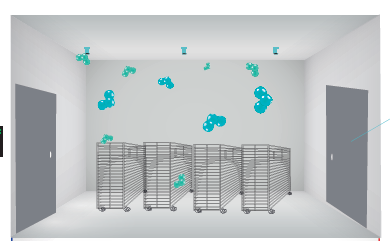
Ozone (O₃) is a powerful oxidising gas that destroys microorganisms such as bacteria, viruses, mould, and spores. In food factories, operators generate ozone using an industrial ozone generator and release it into a sealed room.
Because ozone is a gas, it spreads evenly throughout the space. Consequently, it disinfects:
- Walls, ceilings, and floors
- Food processing equipment
- Packaging and storage areas
- HVAC and air circulation systems
- Hard-to-reach surfaces and corners
Once treatment ends, ozone naturally converts back into oxygen, which makes it a chemical-free disinfection method for food production environments.
Why Food Factories Use Ozone Disinfection
Food manufacturers use ozone whole-room disinfection because it improves hygiene control while reducing operational downtime. Furthermore, it supports compliance with strict food safety standards.
Key benefits of ozone disinfection in food factories:
1. Complete room-wide disinfection
Ozone fills the entire space, ensuring uniform microbial control.
2. Chemical-free sanitation process
No toxic residues remain after treatment, which supports food safety compliance.
3. Broad-spectrum antimicrobial action
It eliminates bacteria, viruses, mould, and biofilms.
4. Faster cleaning cycles
Factories reduce downtime between production runs.
5. Reduced labour and manual cleaning costs
Ozone automates part of the sanitation process.
6. Improved hygiene consistency
It provides repeatable and controlled disinfection results.
How Ozone Whole Room Disinfection Works
The ozone disinfection process in food factories follows a controlled cycle to ensure safety and effectiveness.
Step 1: Room sealing
Operators seal the room to prevent ozone leakage.
Step 2: Ozone generation
An industrial ozone generator releases controlled ozone into the space.
Step 3: Even distribution
Fans circulate ozone to ensure full coverage across the entire room.
Step 4: Disinfection contact time
Ozone oxidises microorganisms on surfaces and in the air.
Step 5: Natural breakdown
Ozone converts back into oxygen after completing the disinfection process.
Step 6: Safe re-entry
Once sensors confirm safe oxygen levels, staff re-enter the area.
Applications of Ozone Disinfection in Food Factories
Ozone whole-room disinfection is widely used across the food industry, including:
- Meat and poultry processing plants
- Dairy production facilities
- Bakery and confectionery factories
- Beverage and bottling plants
- Cold storage and refrigeration rooms
- Food packaging and clean rooms
In addition, it is often used for deep cleaning food production areas between production cycles or during maintenance shutdowns.
Ozone Disinfection vs Traditional Food Factory Cleaning
Food factories traditionally rely on chemical cleaning, fogging, or manual sanitation. However, ozone disinfection offers a more advanced alternative.
| Feature | Chemical Cleaning | Ozone Whole-Room Disinfection |
|---|---|---|
| Coverage | Manual, inconsistent | Full-room gas penetration |
| Residue | Chemical residues possible | No residue (oxygen only) |
| Labour | High manual effort | Low labour requirement |
| Downtime | Longer cleaning time | Faster sanitation cycles |
| Hidden contamination | Often missed | Fully treated by gas |
Therefore, ozone provides a more efficient food factory cleaning and disinfection solution.
Safety of Ozone Disinfection in Food Facilities
Although ozone is highly effective, food factories must apply it under controlled conditions. Because of its strong oxidising properties, operators follow strict safety protocols.
Safety requirements include:
- Sealed treatment areas during disinfection
- Controlled ozone concentration levels
- Ozone monitoring and detection systems
- Proper ventilation after treatment
- Trained operators for system management
Once ozone fully decomposes into oxygen, the environment becomes safe for staff re-entry.
Benefits of Ozone for Food Safety Compliance
Food factories must comply with standards such as HACCP, BRCGS, and ISO 22000. Ozone whole-room disinfection supports these systems by improving hygiene control and validation processes.
Compliance advantages include:
- Reduced microbial contamination risk
- Improved sanitation documentation
- Stronger environmental hygiene control
- Support for audit readiness
- Reduced reliance on harsh chemical disinfectants
In addition, ozone helps factories maintain consistent hygiene performance across production lines.
Why Ozone Is the Future of Food Factory Disinfection
Food manufacturers increasingly adopt ozone technology because it aligns with modern production demands. Specifically, it supports automation, sustainability, and efficiency.
Key reasons for adoption:
- Reduces chemical usage in food production
- Lowers cleaning time and operational downtime
- Improves hygiene consistency and reliability
- Supports sustainability and environmental goals
- Enhances overall food safety performance
As a result, ozone is becoming a standard part of modern food factory sanitation systems.
Conclusion: Efficient and Sustainable Food Factory Disinfection
Ozone whole-room disinfection provides food factories with a powerful, chemical-free solution for improving hygiene, reducing contamination risks, and increasing operational efficiency. Because it disinfects entire spaces in one controlled cycle, it delivers consistent and reliable results across food production environments.
In conclusion, ozone technology helps food manufacturers achieve higher hygiene standards while reducing costs and improving productivity.
Speak to the Ozone Disinfection Specialists
If you are considering Ozone Whole Room Disinfection or any Ozone Based solution, please contact our team who can help design a solution for your facility.
Contact SOS for more information.
Call: 0161 221 2231
Email: info@soshygiene.com.
Specialised Ozone Solutions and SOS Hygiene Technologies are proud members of the European Ozone Trading Association

FAQs: Ozone Whole-Room Disinfection
What is ozone whole-room disinfection?
Ozone whole-room disinfection is a process that uses ozone gas (O₃) to sanitise an entire enclosed space. The gas fills the room and oxidises bacteria, viruses, mould, and organic contamination on surfaces and in the air.
How does ozone disinfection work in a room?
An ozone generator releases controlled ozone into a sealed space. The gas circulates throughout the room, reacts with microorganisms, and breaks them down. After treatment, ozone naturally converts back into oxygen.
Is ozone whole-room disinfection safe?
Yes, it is safe when trained operators use it correctly. The room must remain sealed during treatment, and proper ventilation must occur afterwards. Once ozone levels return to safe limits, people can re-enter the space.
What does ozone kill during disinfection?
Ozone effectively destroys a wide range of contaminants, including:
- Bacteria
- Viruses
- Mould spores
- Fungi
- Biofilms
- Organic odours
How long does ozone disinfection take?
Treatment time depends on room size, contamination level, and ozone concentration. Typically, cycles range from 30 minutes to several hours, followed by a ventilation period.
Does ozone leave chemical residues?
No. Ozone does not leave chemical residues. After completing the disinfection process, it breaks down naturally into oxygen (O₂), making it a chemical-free method.
Can ozone be used in food factories?
Yes. Food factories commonly use ozone whole-room disinfection to improve hygiene, reduce microbial contamination, and support HACCP compliance in production environments.
Does ozone damage equipment or surfaces?
When used at correct concentrations and exposure times, ozone does not damage most industrial materials. However, operators must avoid overexposure and follow manufacturer guidelines.
How often should ozone disinfection be used?
Frequency depends on the facility type and hygiene requirements. Many food factories use ozone daily, weekly, or between production cycles as part of their cleaning schedule.
What are the main benefits of ozone whole-room disinfection?
Key benefits include:
- Full-room coverage, including hard-to-reach areas
- No chemical residues
- Reduced downtime compared to manual cleaning
- Strong antimicrobial effectiveness
- Improved hygiene consistency
Is ozone better than traditional cleaning methods?
Ozone does not replace all cleaning methods, but it enhances them. It provides deeper, more uniform disinfection compared to manual cleaning alone, especially in large industrial spaces.
Can ozone remove odours in rooms?
Yes. Ozone neutralises odours by oxidising the organic compounds that cause them, making it effective for food factories, cold storage, and processing areas.
What safety measures are required for ozone disinfection?
Important safety steps include:
- Sealing the treatment area
- Using ozone sensors and monitors
- Ensuring no human exposure during treatment
- Ventilating the space before re-entry
- Training operators properly