1. “Ozone Is Always Harmful to Humans”
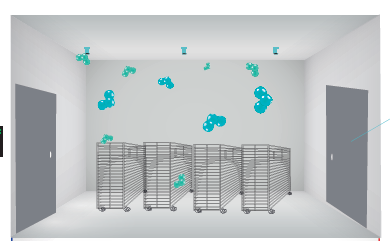
Reality Check: Like any strong oxidant, ozone can irritate lungs if inhaled at high concentrations. But used correctly—inside sealed chambers, with proper sensors and destruct units—ozone poses no risk to people. In fact, hospitals have been using ozone to disinfect operating theatres, hotel laundries rely on low-level ozone for continual sanitation, and food plants dose cold-storage rooms with ozone gas to inactivate pathogens. Whenever ozone is applied in occupied zones, concentrations are kept well below occupational exposure limits (typically 0.1 ppm or less), and any excess is destroyed before the room reopens.
Bottom Line: Ozone is safe when designers and operators follow established COSHH and BPR guidelines—no different than handling chlorine or other biocides.
2. “All You Need Is a Little Ozone, and Everything’s Sparkling”
Reality Check: Ozone is indeed a potent disinfectant and oxidant, but it’s not a “set-and-forget” solution. Adequate sanitation requires the right dose, correct contact time, adequate mixing and proper destruction afterwards. For example:
-
Ozone gas for whole-room disinfection needs well-positioned injectors and a recirculation fan or HVAC integration to ensure coverage in corners, high shelves and drain areas.
-
Ozonated water in CIP loops requires accurately sized static mixers or venturi injectors, plus inline sensors to confirm dissolved ozone levels.
Bottom Line: Think of ozone like a precision tool, not a blunt instrument. Get the parameters right (temperature, humidity, flow rates), and ozone delivers quick, residue-free sanitising. Get them wrong, and you’ll either under-treat (miss pathogens) or over-treat (waste gas, trip alarms).
3. “Ozone Can Replace All Chemicals and Cleaners”
Reality Check: Ozone is excellent at inactivating microbes, oxidising organic compounds and stripping away odours, but it doesn’t solve every cleaning challenge. Heavy soils, grease, biofilms and mineral scale often need mechanical scrubbing or detergents before ozone can do its magic. In many food-processing plants, for example, plant operators still need a “wet-clean” with alkaline or acid detergents during scheduled shutdowns; ozone then takes over during production for continual microbial control.
Bottom Line: Ozone is a powerful complement to chemicals and physical cleaning—it can drastically reduce chemical usage (often by 30–50 %) and water consumption, but it’s not a one-stop shop for every grime scenario.
4. “If Ozone Smells ‘Fresh,’ It’s Good for Your Lungs”
Reality Check: That sharp, slightly sweet scent you notice after a thunderstorm or near an ozone generator is a tipoff that you’re breathing ozone, not clean air. While low-level ozone smells “fresh,” it’s still an irritant at higher concentrations. Never mistake a “pleasant” ozone odour for a green light to keep the generator running with no protection—occasional sniff checks are never a substitute for continuous monitoring.
Bottom Line: Some people describe ozone’s aroma as “the smell of clean air,” but indoor systems always maintain concentrations below 0.05 ppm, in line with the ACGIH threshold limit value and well under the OSHA 8-hour PEL of 0.1 ppm.

5. “Ozone Works Exactly the Same in Air and Water”
Reality Check: As the image above illustrates, ozone (O₃) is a bent molecule with a 116° bond angle, giving it unique reactivity in different phases. In the gas phase, O₃’s triatomic structure allows it to directly oxidise microbial cell walls and airborne VOCs. In water, the same geometry helps ozone dissolve into microbubbles, where it either reacts directly with dissolved contaminants or breaks down into hydroxyl radicals (•OH), which are even more reactive. Factors such as temperature, pH and organic-matter concentration all influence how long ozone persists in water; its half-life ranges from 5 to 30 minutes, while in air it typically decays in minutes to tens of minutes.
Bottom Line: Designing a chamber for gas-phase ozone disinfection differs significantly from sizing an ozone injector for a water-treatment skid. Engineers must account for ozone’s molecular solubility, contact time and mass-transfer behaviour—information that starts with understanding the bent O₃ structure shown above.
Whether you’re curious about how ozone can fit into your specific application or ready to design a custom system, we’re here to help. Reach out to our ozone experts today for advice, no strings attached. We’ll walk you through your options and make sure you find the perfect ozone solution for cleaner, safer operations.